 AcrosstarBaZi consultations · 1:1
Counting the nines after the winter solstice
The winter solstice is coming. This year it falls on December 22nd. The solar-term calendar shifts by a day or two each year, and most people don't keep the exact date in their heads — which is fine, because long ago the Chinese came up with a system for that. Starting from the day of the winter solstice, you begin "counting the nines."
Why the solstice? Because in the old calendar, it was a turning point: the shortest daylight, the longest night — and after it passes, the days grow longer one by one. It's the deepest part of winter and the starting line of the coldest stretch. There's an old folk saying that treats the solstice as a little New Year — a good meal, family gathered. A day honored that way makes a fitting head for the coldest road of the year.
What does the counting mean? From the solstice onward, every nine days count as one "nine" — the first nine, then the second, the third, up to the ninth. Nine times nine is eighty-one days, roughly the coldest stretch of the year, walked one block at a time. The day you finish is called "coming out of the nines." Most of the time, once you're out, spring is right in front of you: ice cracks, rivers move, willow buds appear.
Numbers alone are dry, so people paired the counting with a song — the Nine-Nines Song. The most widespread version goes: "First nine, second nine, hands stay in your sleeves; third nine, fourth nine, you can walk on the ice; fifth nine, sixth nine, willows by the river green; seventh nine the river opens; eighth nine the geese return; nine times nine plus one, and oxen plow every field." Versions vary from region to region, but the gist is usually the same: a little warmer each day, a little more to look forward to. And a song is easy to keep — it rolls off the tongue, young and old alike, and the counting becomes a habit without anyone forcing it.
But more than the song, I want to talk about the Nine-Nines Winter-Dispelling Chart — the count drawn on paper, a kind of winter journal kept by hand. In old times, many households put the chart up on the solstice, on a window or a wall, where the whole family saw it daily.
One form is a single plain plum branch. Draw a branch with exactly eighty-one petals, no more, no less. From the solstice, color in one petal a day. The petals dwindle as the days pass, and usually the weather warms a little with them. When the last petal is colored, winter is more or less over. Hanging by the window, the branch fills day by day — and the heart in the house loosens with it. Each stroke takes only a minute or two, but those two minutes give the day a name on paper.
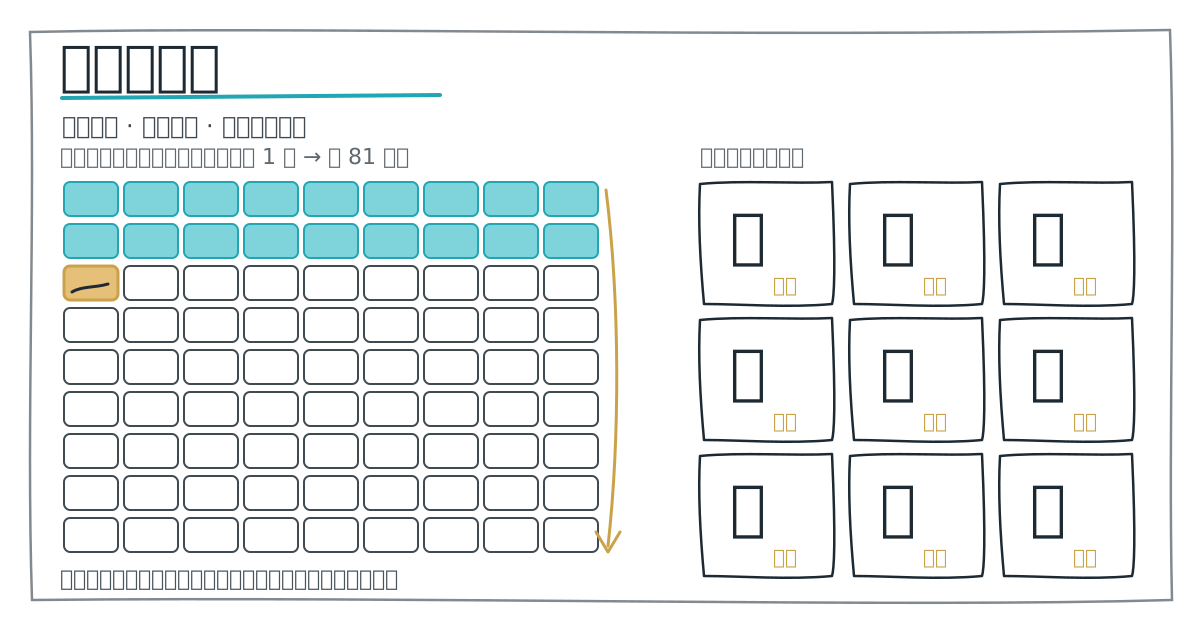
The other form is more literary: nine characters — a classical line meaning, roughly, "By the pavilion, the drooping willow; cherish and await the spring breeze." Why these nine? Written in the old forms, each character has nine strokes. Nine characters, nine strokes each, nine times nine: eighty-one. From the solstice you trace one stroke a day; one character takes nine days, and when all nine are finished, all nine nines are counted.
Some people play finer still: as they trace the day's stroke, they mark the weather — overcast, sunny, snowing. After eighty-one days the writing doubles as a tiny weather journal. The variation isn't widely known, but it shows how some people waited with style.
Think of it as a progress bar for winter. Eighty-one cells, one per day, one stroke per cell. The bar only moves forward, and every stroke counts. Looking back, the paper is thick with proof that the days happened — a handwritten progress bar, more honest than many streak-tracking apps.
What I love is the thinking behind it. The hardest part of winter isn't the cold; it's not knowing how much longer the wait runs. A cold snap in late November and your heart sinks: only just begun? Another in January: two more months of this? Open-ended waiting wears people down.
The chart breaks that open-ended wait into eighty-one small, named marks. Trace one stroke, and today has genuinely been lived; tomorrow belongs to tomorrow. The wait stops being one heavy stone on your chest and becomes eighty-one small pieces — and most people can carry one small piece a day.
So counting the nines is, at its core, a method for dealing with length. It doesn't pretend winter isn't cold, and it doesn't urge you to cheer up. It spreads the abstract number "eighty-one" on paper, one stroke a day. You don't survive those days by gritting your teeth — you get through them one stroke at a time.
And the trick still works today, at almost no cost: paper, a pen, somewhere to stick it — a cubicle wall, the fridge, or a phone where you screenshot each filled cell. The form can change; the principle stays: swap "it's still so far away" for "just today's cell." A countdown app could do the math for you — but an automatic number and a hand-drawn cell differ in one word: "hand." One is time pushing you along; the other is you walking, one stroke at a time.
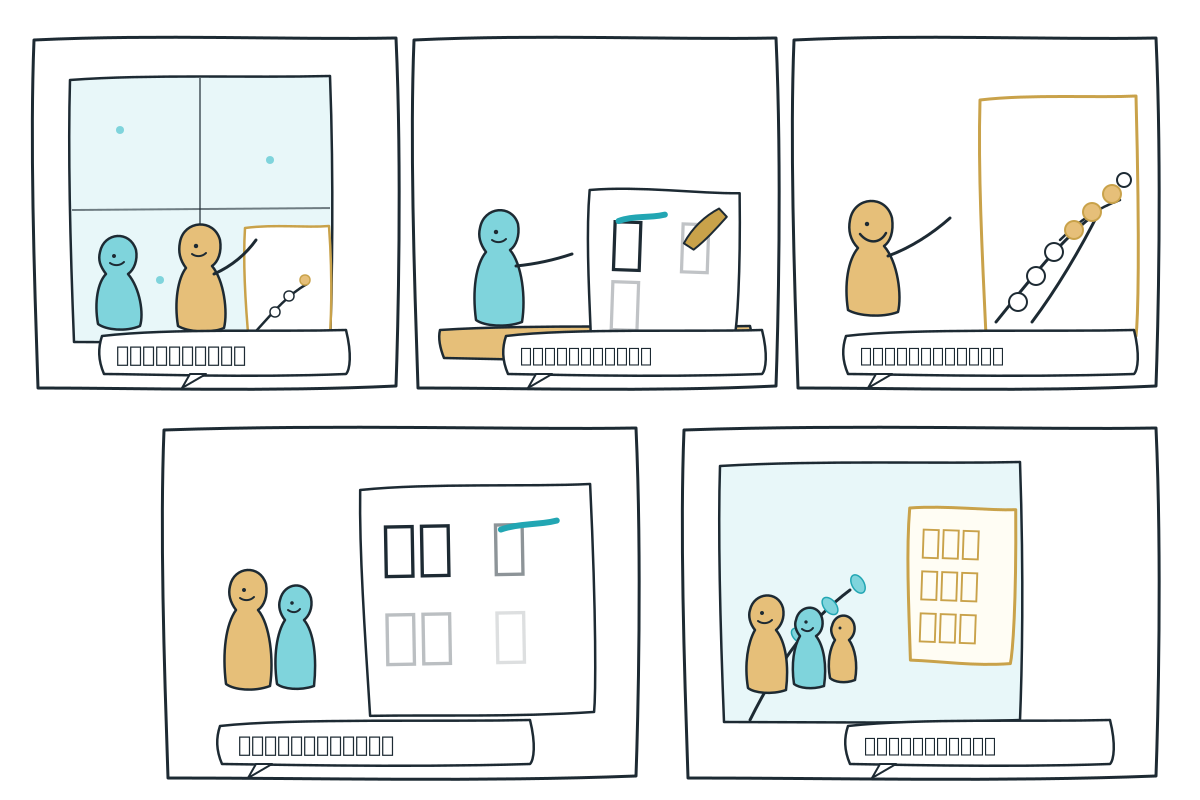
There's still some time before the solstice. Whatever you're waiting for — a reply, a result, the start of a new stretch — try this old trick: draw a winter-dispelling chart for the one thing you're waiting on. Eighty-one petals, nine nine-stroke characters, or eighty-one rough squares. One square a day, and by the time the chart is full, there's a good chance your waiting has an answer too.
What you're waiting for doesn't matter. What matters is this: from today on, you know winter can be drawn to an end, one stroke at a time.
Acrosstar offers cultural readings and structured analysis based on Chinese BaZi (Four Pillars), for self-reflection and decision support. It describes tendencies, does not predict events, promises no specific outcome, and is not medical, psychological, legal or financial advice. For major decisions, consult a licensed professional in that field. For adults 18+ only.
Want your own situation drawn as a map?
Start with a free topic check: describe your question and we reply whether it suits a reading and which tier fits.