 AcrosstarBaZi consultations · 1:1
The Well hexagram: the well does not move
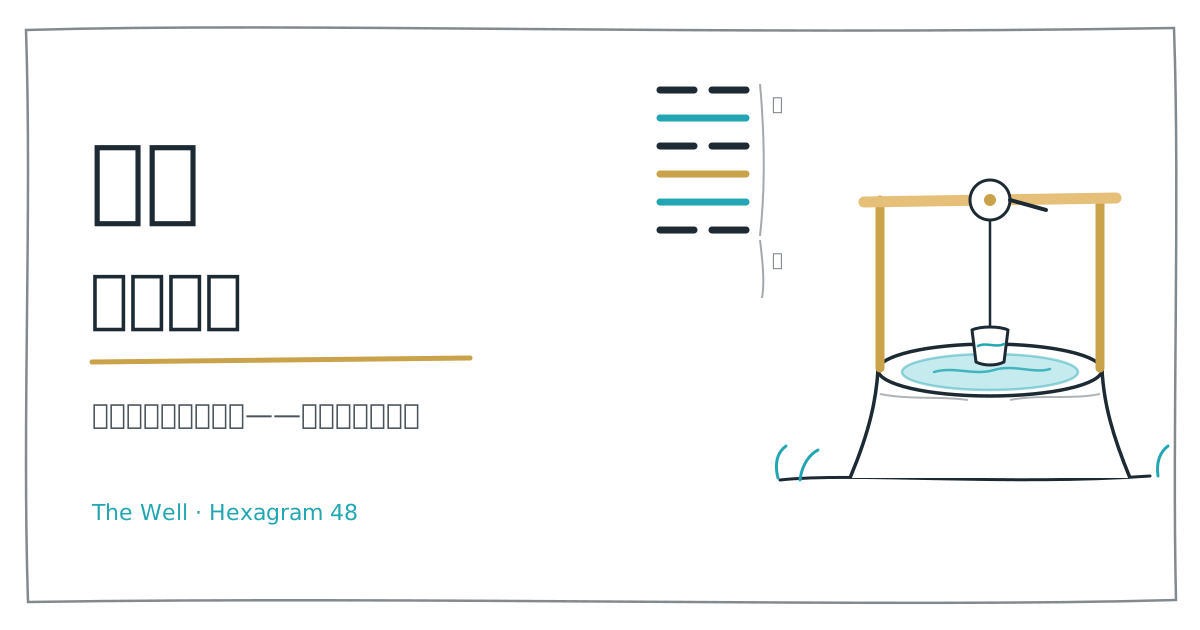
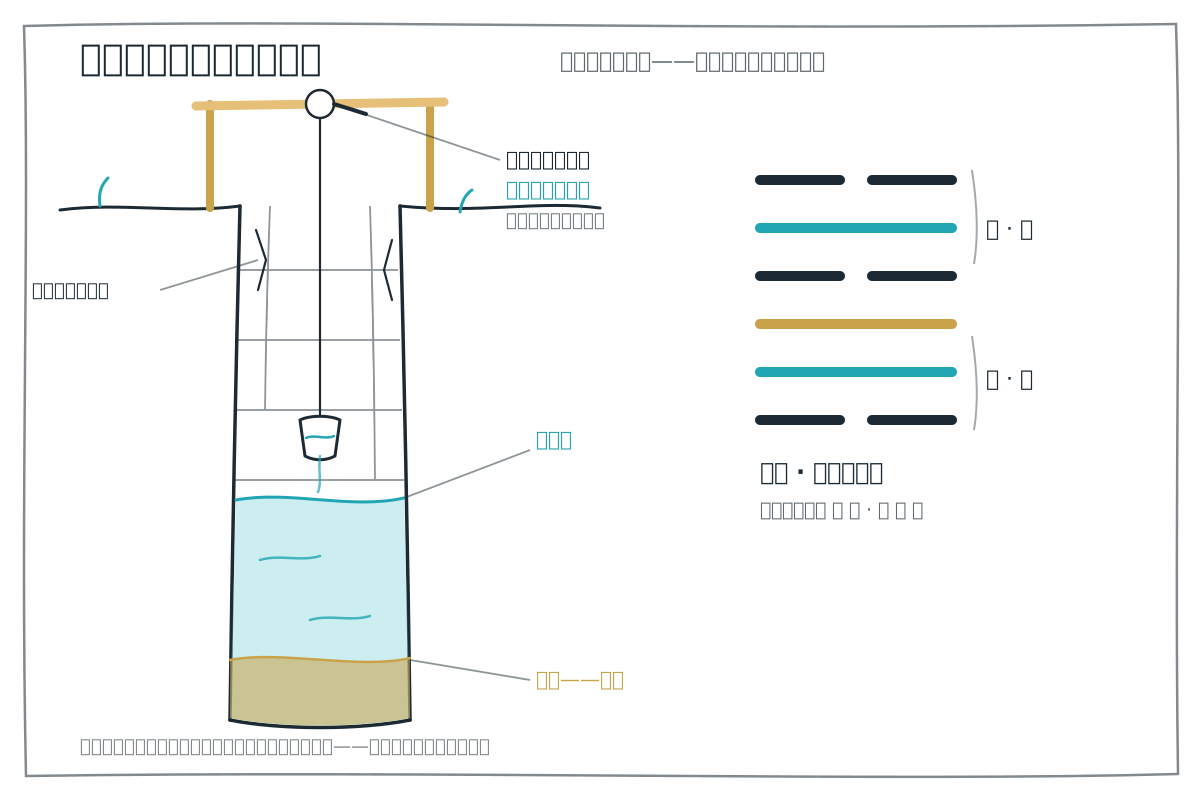
The forty-eighth hexagram of the Book of Changes is Jing, the Well. Its structure is water above, wood below: the upper trigram Kan is water, the lower trigram Xun is wood. Wood goes down into the water and draws it up — a very concrete picture. It's a wooden frame over a wellhead, a bucket on a rope, someone pulling water up. When the ancient editors arranged this hexagram, they were probably looking at the village well.
The most quoted line from the hexagram text is: "A town may be moved, but the well cannot be moved." The settlement can relocate; the well stays where it is. Houses get torn down and rebuilt, people come and go through generations, and the well remains at the same spot, with the same water level. The well is a thing that does not travel.
Think about that for a moment. A person moves many times in a lifetime and changes surroundings over and over. Some accumulations move with you; some stay where they were made. The Well hexagram is about the second kind — the things that stay in place and need someone to go down and maintain them.
The line texts read like a well-cleaning log
The line texts of this hexagram can almost be read as a maintenance record for an old well.
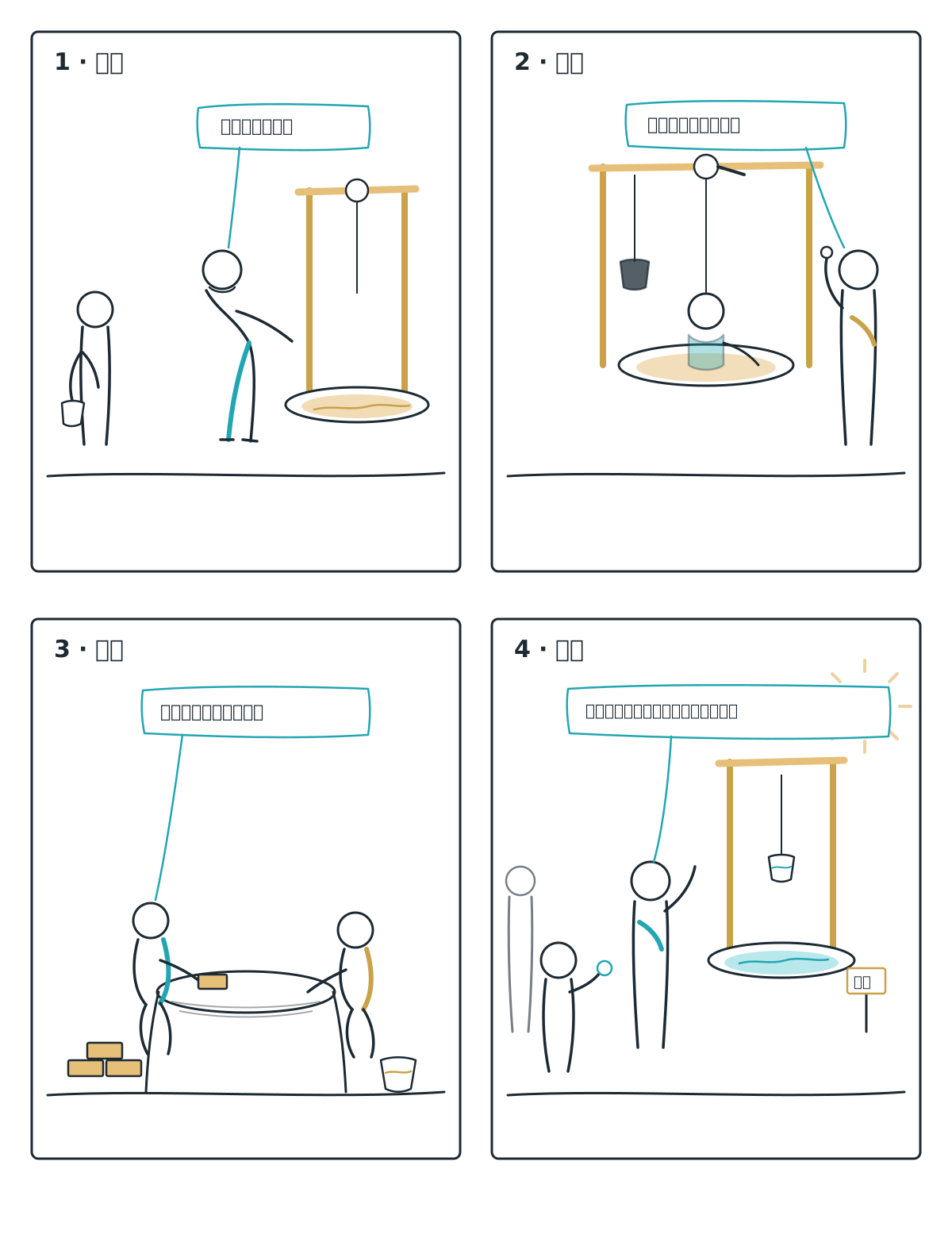
The bottom line speaks of mud in the well — the water drawn up is murky, and nobody will drink it. The well isn't broken; it just hasn't been cleaned in a long time. Sediment settles and thickens at the bottom. The water is still there; you just can't reach the clean part.
Further up, a line says the well has been cleaned, yet no one comes to draw from it. That picture is a little lonely: the well has done its part, but nobody lowers a bucket. Often the problem isn't the thing itself — it's that nobody walks up to it.
And then there is the line about lining the well with bricks. Cleaning is clearing out the mud; lining is repairing the structure. After years of use, the shaft loosens and crumbles. Clear water alone isn't enough; the structure itself needs work.
Read the three together and you get a plain maintenance sequence: notice the mud, remove the mud, then fix the loosened walls. Nothing mystical — all physical labor.
You have a few wells too
Carrying this image into daily life, wells can stand for several kinds of things.
Skills are wells. When freshly learned, the water is clear and drawing is easy. Leave the well untouched for a long time and mud collects — terms are forgotten, the feel is gone, and when you return, the first buckets come up murky. The well hasn't dried; it just needs cleaning. Skimming old notes, picking up a small project again — that's cleaning the well.
Relationships are wells too. Old friends, family, long-term collaborators — while everyone is busy, the well just sits there. Many relationships don't break from arguments; the shaft loosens bit by bit. One unanswered message, one missed "how are you," and the gaps accumulate. Repairing the wall is harder than removing mud, because it takes structural attention rather than a cleanup: arrange a meeting, have a real conversation, rebuild the loose spots.
Habits are wells as well. A sleep schedule kept for years, a way of tracking expenses, a weekly run — these wells look unremarkable, but they are the base of daily order. The hexagram's reminder is simple: well water does not keep itself clean. Every well has a maintenance cycle, and the longer you put it off, the thicker the mud.
One more detail deserves notice. In the line about the cleaned well nobody drinks from, the well is clean and still nobody comes. Maintenance is not the whole story — after maintaining, you have to use it. A cleaned well with no bucket lowered is cleaned for nothing. The same holds for a skill you never apply, or a relationship you repair and then never visit.
The well does not move, so it is worth maintaining
"A town may be moved, but the well cannot be moved" carries another layer. The settlement can move; the well cannot. Your environment will change, but some wells cannot be carried with you — they sit where they are, and if you don't maintain them, mud collects.
Imagine a person who has changed jobs several times, gathering experience in each. When switching jobs, some experience is like furniture — pack it and it moves. Some is more like a well — it stays in the original environment, such as contacts and processes that only functioned at that particular company. A well like that can't be moved, which makes maintaining the wells in front of you all the more important: the skills in your hands right now, the relationships within reach, the habits of your days. These are the real wells in your current ground, not imagined ones.
The Well hexagram offers no magical lesson. It talks about regular maintenance. A well is a good thing, but it has a temperament: treat it well and it keeps giving water; neglect it for years and it doesn't disappear — the water you draw just gets murkier.
One small thing you can do today
Pick one of your own wells and give it a small act of maintenance today.
It could be a skill well: open a tool you haven't touched in a long time and work through one small exercise.
It could be a relationship well: send one specific, personal message to a friend you haven't contacted in a while — not a mass greeting.
Or a habit well: rebuild one loosened daily brick, like setting a fixed bedtime tonight.
The action doesn't need to be big — cleaning a well was never a big project to begin with. The point is to lower a bucket today.
Acrosstar offers cultural readings and structured analysis based on Chinese BaZi (Four Pillars), for self-reflection and decision support. It describes tendencies, does not predict events, promises no specific outcome, and is not medical, psychological, legal or financial advice. For major decisions, consult a licensed professional in that field. For adults 18+ only.
Want your own situation drawn as a map?
Start with a free topic check: describe your question and we reply whether it suits a reading and which tier fits.