 AcrosstarBaZi consultations · 1:1
No A/B test for a life: taking small steps instead
You have two options. Both are decent. And you just cannot stop weighing them.
Last time we wrote life goals as an objective function. Once that is done, the hard part turns out to be not the math, but the choice.
First, admit what makes A/B testing so attractive. Anyone who has shipped a product knows it: at the same moment, half the users see A and half see B. Let it run, and the data tells you which one wins. Its magic is not cleverness. It is simultaneity. With both versions alive at once, the comparison means something, and the call no longer rests on a feeling.
Life does not give you that. Pick one city and you cannot also live in the other one to check whether it would have been better. Take one job and the year you would have spent elsewhere is gone. Time only moves forward, and each choice has a single path you can actually walk. So even with a clear objective function, you cannot run both options and compare the results.
That is where a lot of people get stuck. Both options have merit. Think about A and you remember what is good about B; think about B and A pulls you back. The reason you cannot stop is not that you cannot think. It is that no amount of thinking will hand you a control group.
Engineers have a standard move for this: if the big experiment is impossible, make it smaller. Break the decision into small, reversible actions.
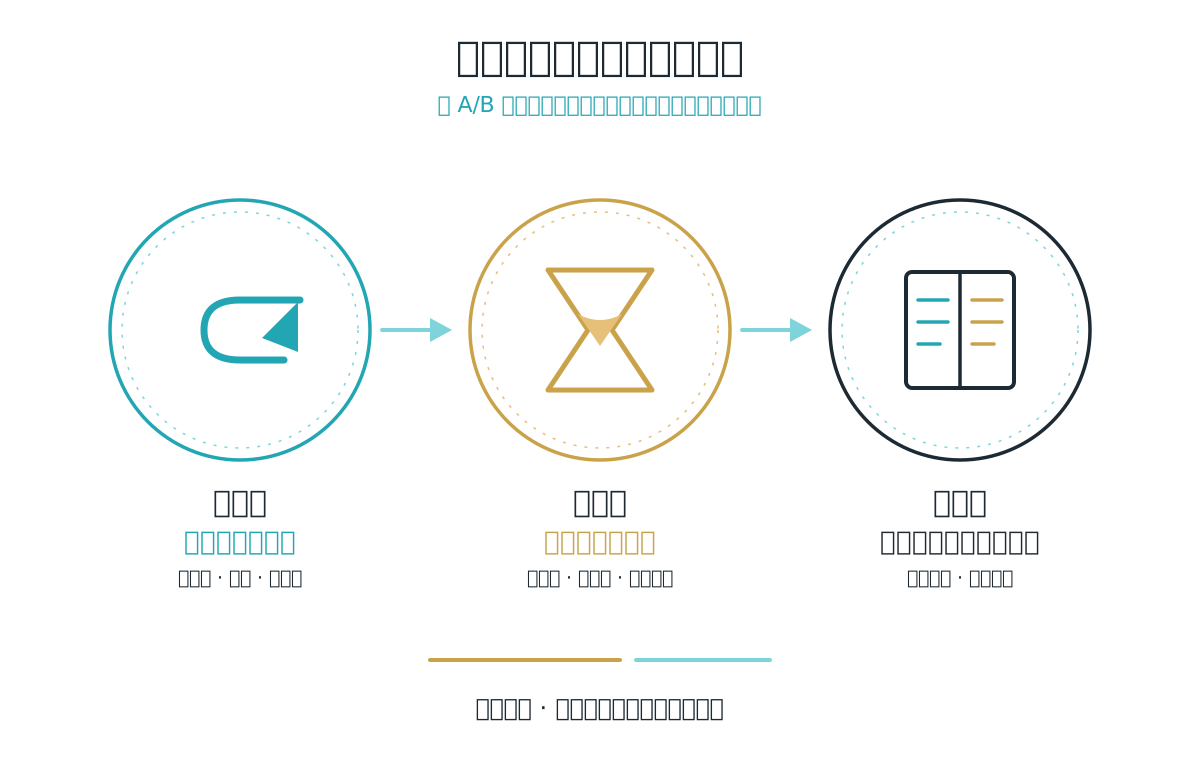
Step one: find the reversible piece. Choices that look final usually contain a part you can try first. Before quitting, ask for a trial period and live through the new routine. Before moving, book a two-week stay. Before switching direction, spend a month on a small project. Each trial has a clear time limit. When it ends, it ends. You are not betting everything on it.
Step two: give the trial an end date. A trial without a deadline is just another kind of procrastination. Write it down: how long, what to watch, what counts as a result, and what you will do if it does not come. When the time is up, the decision returns to you, and this time you are deciding with real experience.
Step three: for the irreversible part, use a side-by-side page. Take one sheet. On the left, write what choosing A looks like; on the right, what choosing B looks like. Include the costs, not only the benefits. Picture the next five or ten years. Write down what you would lose. A page is no substitute for real data, but it turns a knot of worry into lines you can inspect one by one. Often you will see that some fears were only feelings, and some costs simply have to be accepted.
This method is not perfect. It cannot show you the outcome in advance, and not every trial ends with a clear answer. But it moves you from "I must pick one and bet everything" to "I can take a small step, look at real feedback, and decide the next one."
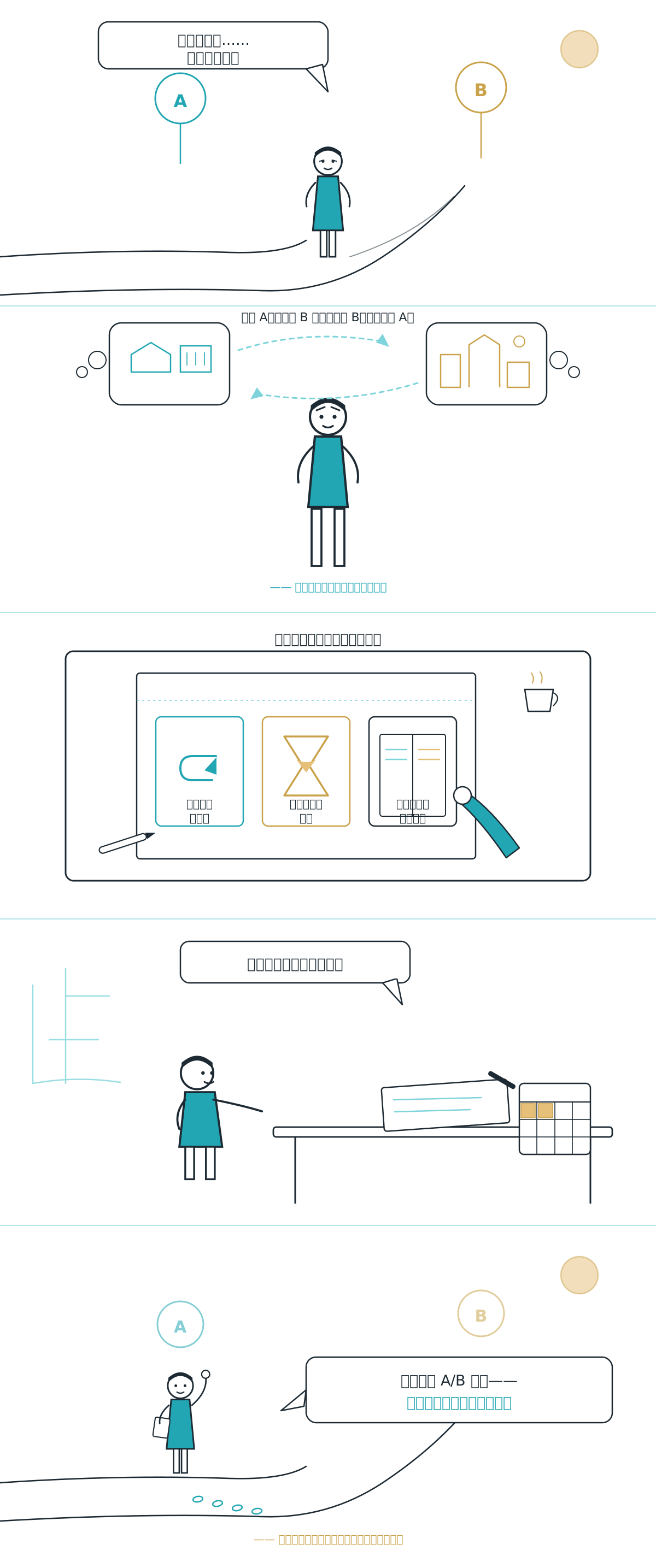
Life has no A/B test, but you can turn it into a series of small experiments. Not every question splits into A and B, but most decisions you cannot stop weighing have a small piece you can try first.
If one decision has you stuck right now, take a piece of paper and write down the small step you can try for two weeks. That one move is something you can do today.
Acrosstar offers cultural readings and structured analysis based on Chinese BaZi (Four Pillars), for self-reflection and decision support. It describes tendencies, does not predict events, promises no specific outcome, and is not medical, psychological, legal or financial advice. For major decisions, consult a licensed professional in that field. For adults 18+ only.
Want your own situation drawn as a map?
Start with a free topic check: describe your question and we reply whether it suits a reading and which tier fits.