 AcrosstarBaZi consultations · 1:1
After the fork, the river keeps flowing

The decision was made a while ago, and you've been living with the new arrangement. But some nights you still wake with a small jolt: did I take the right turn?
Earlier we wrote about a river that changed course. On an ordinary afternoon it slipped around a hard stone into a lower, wider bed. No roar. The surface simply faced a new way.
The change is done now. The water moves easily through the new channel — bending at the bends, splitting around fresh rocks, meeting again downstream. Seen from above, it is still the same river.
Only the banks are different. Half the old gravel bar is gone, and a new sandbar is quietly building on the far side. Step into the old riverbed and you find cracked mud, and a few stubborn weeds rooted in the stones. They say nothing. They only remind you: this used to be a river.
Most evenings, the keeper of the old ferry crossing sits by the bank. He doesn't persuade anyone. He just watches the water. Someone asked: the river has moved — why still look at the old bed? He smiled. "The water goes on. People look back."
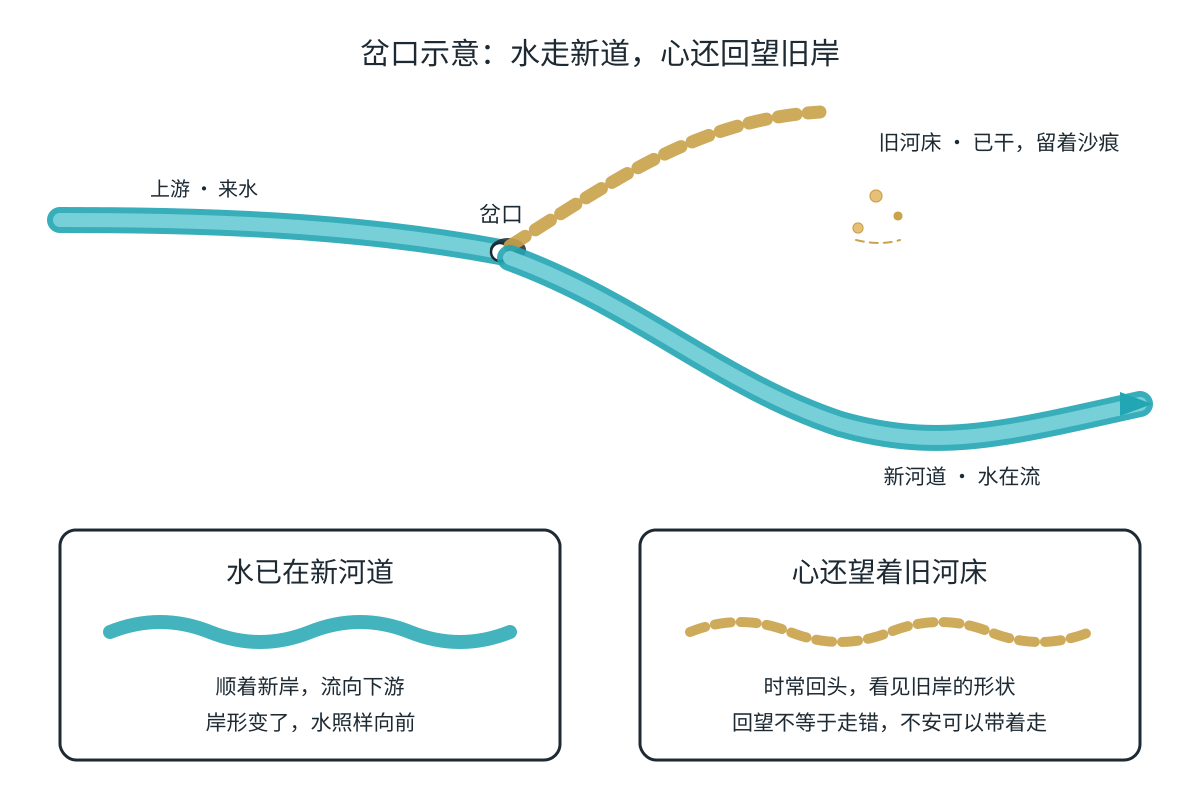
Nothing clever in that. But it loosens something. Looking back at the old bed doesn't mean you took the wrong turn. It only means your body got used to the old banks, to the direction the water sound used to come from. The new channel hasn't been learned by the body yet, so a small empty space opens inside.
That's where the unease comes from. You may be doing fine with the new arrangement, and still, in the middle of the night, wonder: what if I had skipped that fork? The thought isn't a problem to solve. It's more like sand on the bank — the wind carries some off, some stays, and after a while it stops catching your eye.
The river didn't wait until it felt calm before it flowed. It took its stones and silt and all those wordless backward glances, and moved on down the new channel anyway.
How long before the looking back stops? The keeper gave no date. The water runs the new course for a few months, the grass on the banks turns over once, and the looking back thins out on its own. He only said that time will wear the mud on the banks a little smoother. This isn't a demand to let go now. It's just admitting: the body needs some road before it recognizes the new sound of water.
People work the same way. After a change of course, you can keep one eye on the old riverbed while you put your feet into the new water. The river is still flowing. You can keep going too.
The water carries its silt and its old memories downstream, and it still fills the village wells, the rice fields, and the travelers' tea.
Unease can travel with you. You don't have to settle it before you're allowed to keep living.
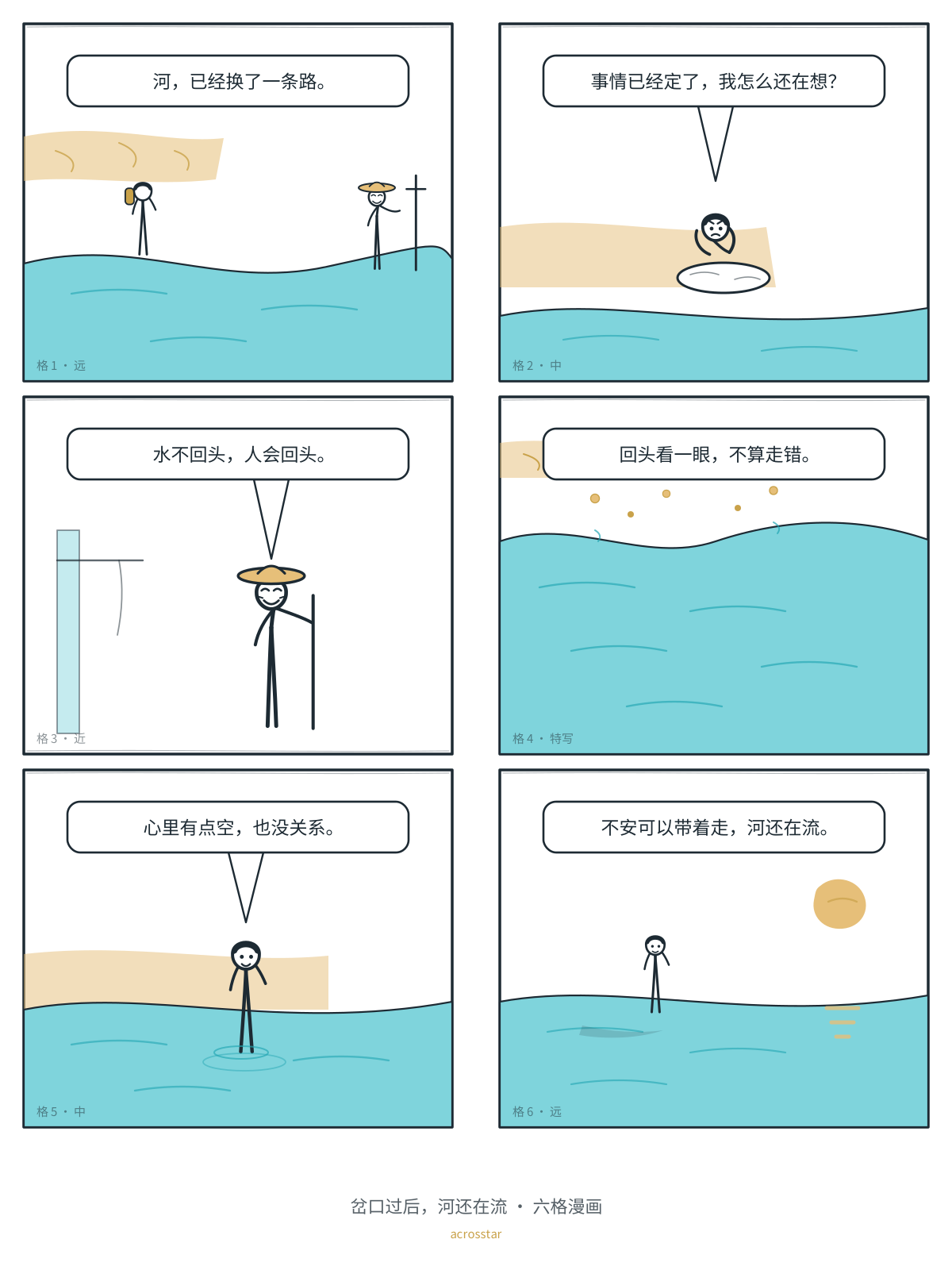
One small thing you can do today: give yourself two minutes before sleep. Stand by a window or on the balcony, phone away, and think of one small thing you finished today. Then go to sleep.
Further reading: The year the river changed
Acrosstar offers cultural readings and structured analysis based on Chinese BaZi (Four Pillars), for self-reflection and decision support. It describes tendencies, does not predict events, promises no specific outcome, and is not medical, psychological, legal or financial advice. For major decisions, consult a licensed professional in that field. For adults 18+ only.
Want your own situation drawn as a map?
Start with a free topic check: describe your question and we reply whether it suits a reading and which tier fits.