 AcrosstarBaZi consultations · 1:1
Zhuangzi's useless tree
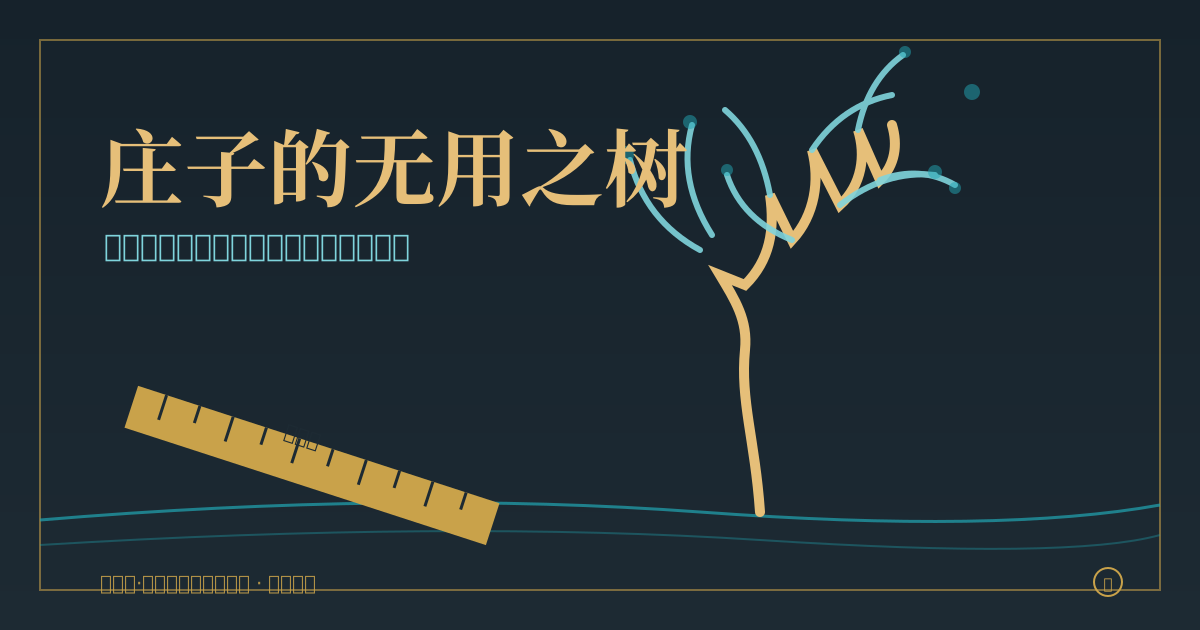
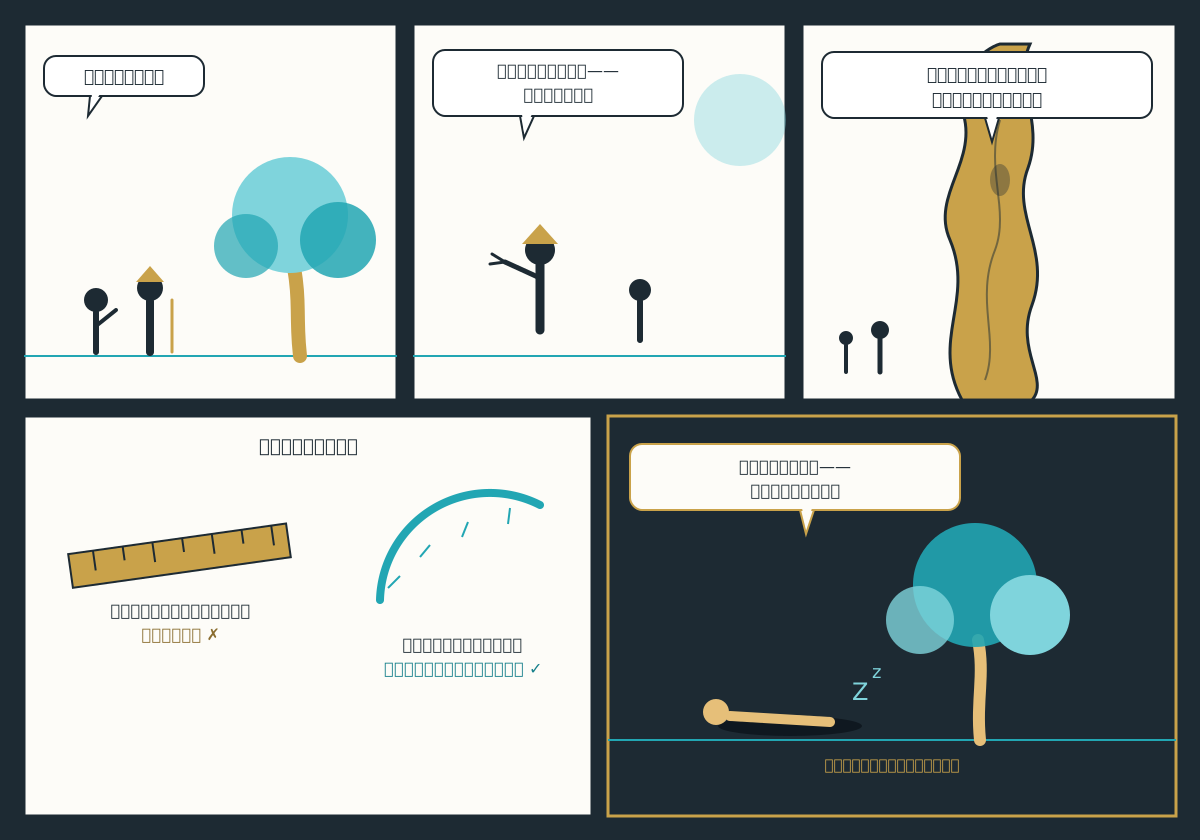
A carpenter was walking with his apprentice when they passed an enormous tree, its shade big enough to shelter a few thousand oxen. The apprentice stared in awe. The carpenter didn't even look up. When the apprentice caught up and asked why, the carpenter said: wood like that makes a boat that sinks, a coffin that rots, a pillar that draws worms. Useless.
In the chapter "In the World of Men," the tree itself gets to speak, in the carpenter's dream. The oak of the village shrine is worshipped by the locals; craftsmen call it "unworthy timber" — and precisely because it is useless, nobody cuts it down, and that is how it grew this old. The tree has, in effect, done the math: a useful tree, once it is big enough for a door or a window, meets the axe; once it is big enough for a beam, meets the saw. The ones that live for centuries are exactly the ones that fail inspection.
An earlier chapter, "Free and Easy Wandering," has another tree, the chu. Huizi complains to Zhuangzi: this tree is big, all right, but "the trunk is too swollen and gnarled to fit a carpenter's line, and the branches too curled and twisted to fit a square or compass." Standing by the road, no carpenter gives it a second glance.
Zhuangzi's answer is delightful. Why, he asks, must you use it for furniture? Plant it in the Land of Nothing Whatsoever. A person can wander beside it, lie beneath it, do nothing at all. No axe will cut it short, and nothing will harm it.
This exchange deserves a second look, because Huizi and Zhuangzi are each holding a different ruler.
Huizi's ruler is the carpenter's: is it straight, does it meet the spec, what can be built from it. The ruler itself is not wrong — a curved boat plank really will sink the boat. The trouble begins when this ruler becomes the only ruler, and everything must queue up for inspection at a security gate with a single item on the checklist: useful, or not.
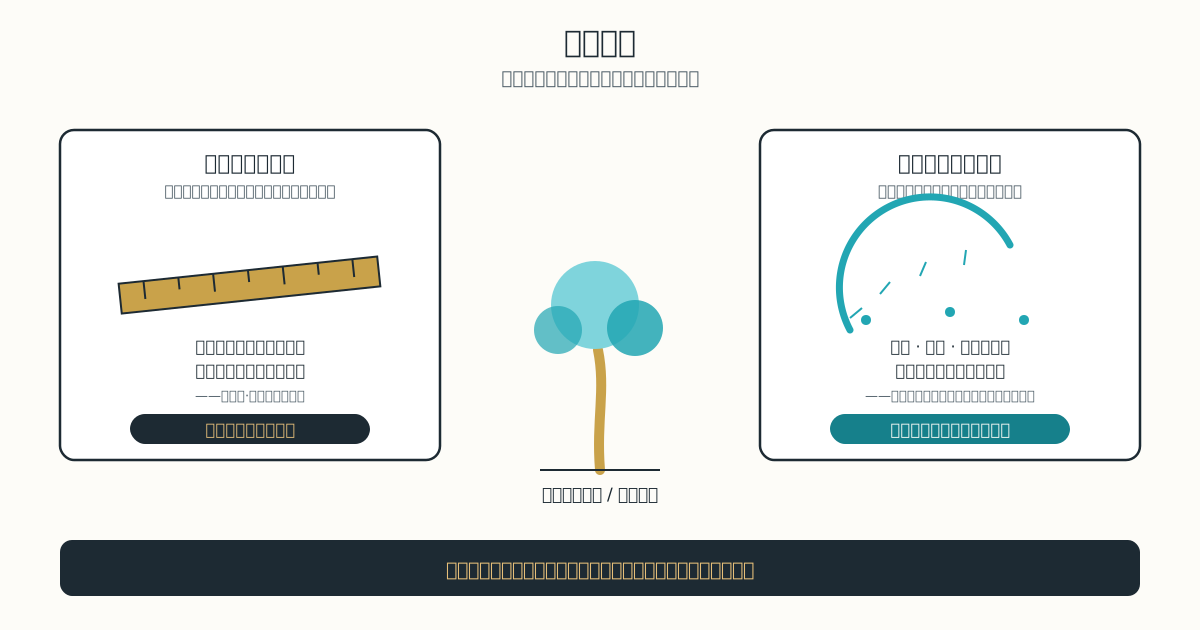
Zhuangzi's ruler asks a different question. Not "what can it do," but "what is this thing, in itself." By its own coordinates, the great tree passes every test: it grows with ease, casts shade, stands for centuries, and gives a tired traveler a reason to stop and breathe. None of these appear on the carpenter's acceptance form, but they are real.
Life offers endless scenes of the single-ruler inspection. In school: what use is this subject? At work: can this skill be monetized? Even a book gets vetted for whether it is "worth it." Ask a question often enough and it turns into air — you stop noticing you are asking. But it keeps filtering: anything that cannot be converted into "use" gets filtered out first. Daydreaming, wandering walks, practicing calligraphy, fiddling with some useless little gadget — none of it clears this checkpoint.
This does not necessarily make anyone unhappy, but it leaves a hard-to-name emptiness: busy every day, yet looking back, it feels like nothing has stayed.
In the oak tree passage, Zhuangzi adds one more line, speaking through the tree: what I pursue is uselessness — if I were useful, would I have lived to this day? (This is a paraphrase of the gist.)
Notice this is not a slogan for lying flat. Look at the detail: the shrine oak did not earn its long life by lying still. It kept growing — the trunk, the shade, the rings — just not in the direction of "timber." What it changed was not its attitude but its coordinate system. Not being chopped down does not mean stopping; it means no longer growing to the carpenter's blueprint.
The same holds for people. Declining to be a "useful person" is not the same as doing nothing. What changes is the inspector. The one who used to grade you held a carpenter's list — output, revenue, a line on a resume. The one who grades you now is the version of yourself who, after real rest, sees more clearly.
There is a side benefit to the new coordinate system: you no longer owe anyone an apology for being useless. A trace of disdain hides inside Huizi's complaint, and disdain is the default tone of every single-ruler system — anything out of spec must first explain its right to exist. Under the other ruler, a tree is a tree; it only has to stand. The same for people: some things get done and that is that, no report to file.
Of course, a coordinate system does not switch over just because you agreed with it. The carpenter's ruler reads out loud in your ear every day, while the other one is silent and easily drowned. That is why the last step matters: not insight, but keeping — giving that useless thing a concrete, reserved slot.
And there is a small thing you can do today.
Think of something you have done that is useless, and that left you feeling restored. Maybe ten minutes of staring into space, maybe taking the long way home, maybe wiping the dust off the leaves of a windowsill plant. Once you have it: keep it today. Not squeeze it in — keep it the way you would protect a tree that no one will chop down, by giving it a place. If anyone asks, you owe them no explanation. The tree knows it is growing.
Acrosstar offers cultural readings and structured analysis based on Chinese BaZi (Four Pillars), for self-reflection and decision support. It describes tendencies, does not predict events, promises no specific outcome, and is not medical, psychological, legal or financial advice. For major decisions, consult a licensed professional in that field. For adults 18+ only.
Want your own situation drawn as a map?
Start with a free topic check: describe your question and we reply whether it suits a reading and which tier fits.