Fuxi and programming: specification first
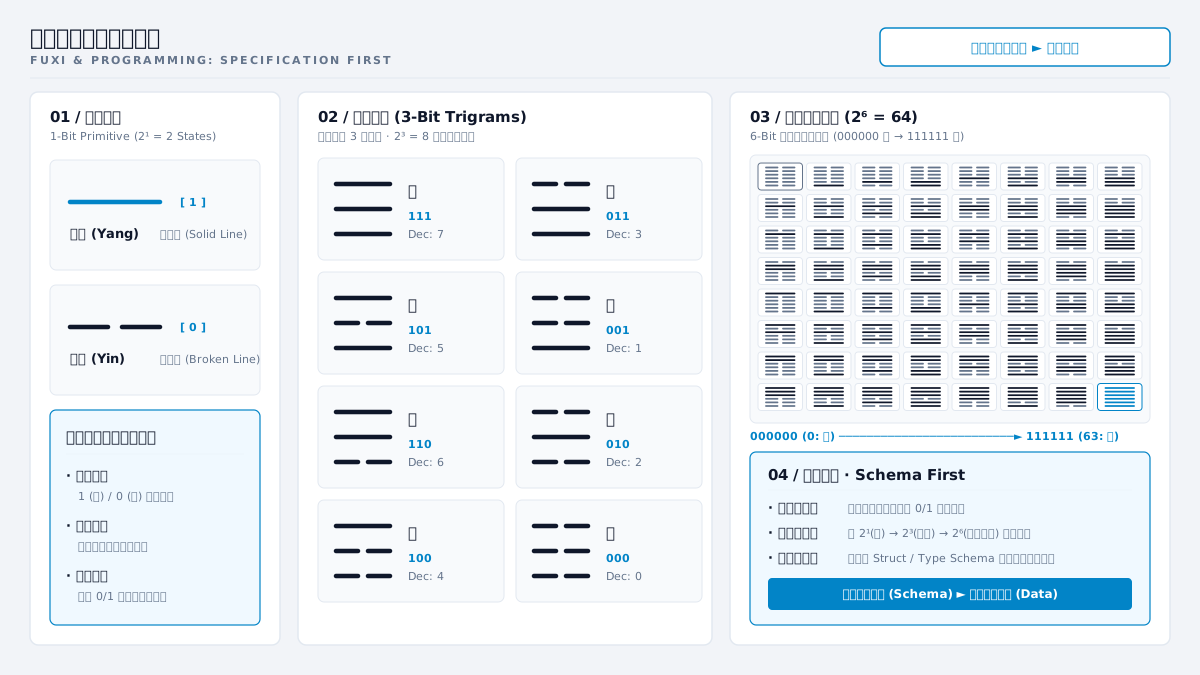
Any encoding that survives transmission begins with a specification. What the symbols look like, how many states there are, in what order combinations proceed — once these are settled, later generations have something to use.
What Fu Xi left behind is precisely such a specification. One line solid, one line broken: two states stand up; three lines stack into a trigram, and the eight trigrams take their posts; six lines stacked again, and the sixty-four hexagrams are complete. Two, eight, sixty-four — all powers of two. This symbolic system unfolds naturally bit by bit, like a building that doubles story by story. More refined still is the temperament of the numbers: odd is Yang, even is Yin; Heaven takes the odd, Earth takes the even — even parity is given its proper name. Encoding here is not merely counting; the very manner of counting is assigned meaning.
A specification also implies trade-offs. Once the solid and broken lines are fixed, they are never altered; all later treatises on the hexagrams merely work within the specification. This closely resembles a modern idiom of the trade: the interface stays unchanged; the implementation may be swapped at will.
With the specification fixed, what remains is combination. Sixty-four hexagrams doubled pairwise yield four thousand and ninety-six situations; each hexagram further corresponds to directions, seasons, and phenology — a timetable hanging alongside the state table. This system served for millennia, from divination to calendrics to medical citation, sustained not by any individual's authority but by the clarity of the specification itself: symbols writable, states countable, combinations queryable.
Today this step is called schema-first. Establish the specification before discussing implementation; the specification constrains imagination and secures mutual recognition — the hexagram you write, I recognize; the arrangement I compose, you can look up. The specification manual set down three thousand years ago has long since yellowed, yet the order it established is recognizable to anyone who has ever written an interface document.
This article is a culture-structure explainer from a programmer's perspective only; it does not constitute career, relationship, medical, or investment advice.