 AcrosstarBaZi consultations · 1:1
Wuxing: the Five Phases as a feedback loop
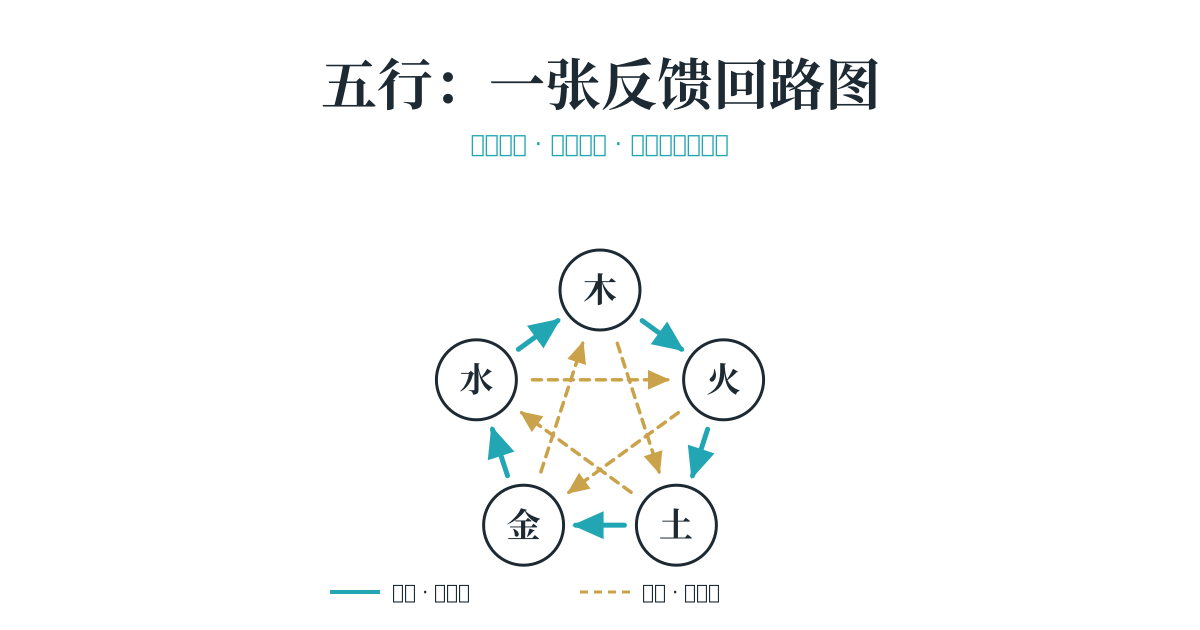
Wuxing, the Five Phases — Wood, Fire, Earth, Metal, Water — is often taught as a list to memorise, each word paired with a direction, a colour, a season. Maybe you are a little curious about your own tendencies, but the moment someone promises to tell your fortune, you want out. Fair. Read differently, wuxing works better as a feedback loop diagram: five nodes, linked by two kinds of relation, one that supplies and one that restrains, and the whole thing holds together in dynamic balance.
Start with the generating cycle, the supply chain. Wood feeds Fire: timber burns and gives off heat. Fire feeds Earth: what burns down becomes ash and soil. Earth feeds Metal: ore forms in deep layers of rock. Metal feeds Water: cold metal condenses moisture on its surface. Water feeds Wood: rain nourishes plants. Five steps, a closed loop, each ring feeding the next with input.
Then the controlling cycle, the flow limiter. Wood controls Earth: roots break into soil. Earth controls Water: a dam holds back a flood. Water controls Fire: water puts out flames. Fire controls Metal: heat melts metal. Metal controls Wood: an axe fells a tree. Note that control here is not destruction; it is restraint — it pushes any single node's growth back into a reasonable range so nothing dominates.
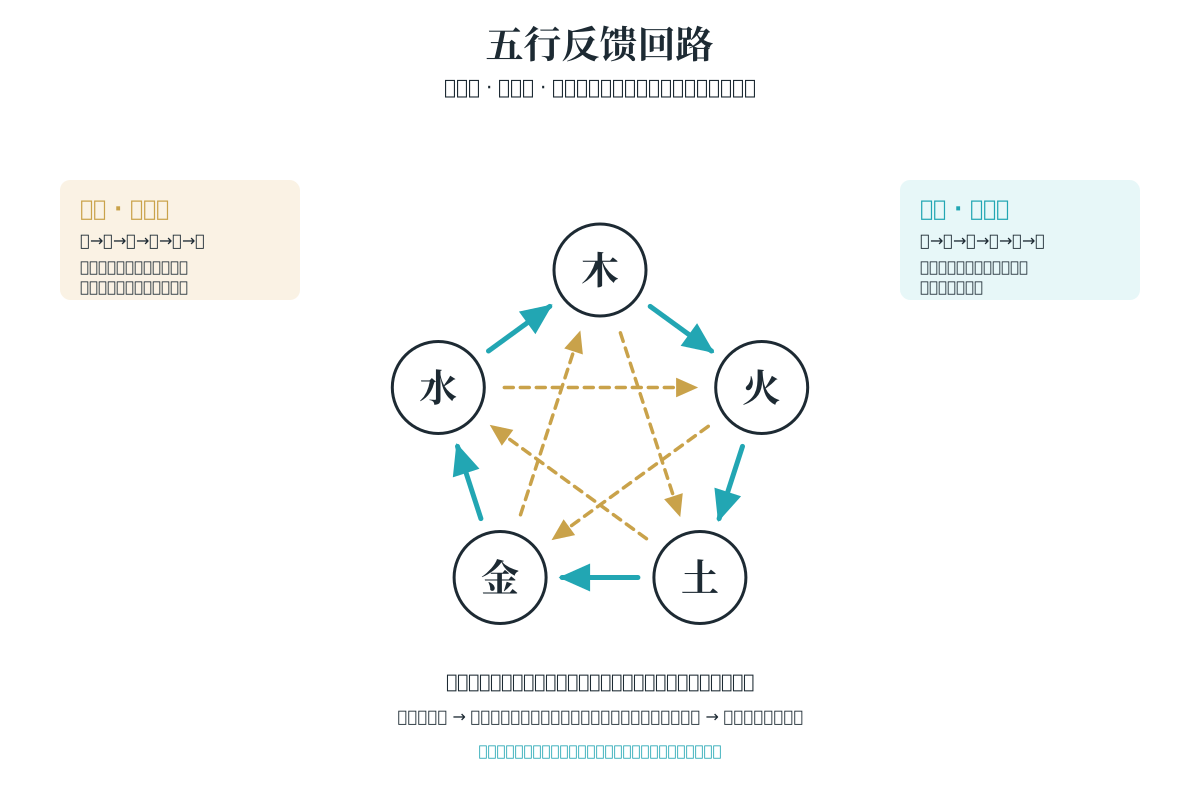
Open the interactive diagram →
Put the two together and you get a system with both positive and negative feedback. Generation keeps the loop moving; control keeps it from running away. When one node grows too strong, the node it restrains feels more pressure, and the node it feeds receives more support. The system redistributes on its own.
To be clear: this diagram is a structural tool for describing tendencies and cycles. It is not a prediction tool. It judges no one's day, claims nothing about anyone's future, and asks for no birth information. Its job is to help you see relationships — in a product, in a team, in the changing seasons — through two lenses: supply and limit. Where to add force, where to slow down.
The reading method is simple: pick one node, follow the arrows to where its force goes and who holds it back. If one ring of a project keeps overreaching, trace the restraining direction and ask: which ring is pressing on it, and is it pressing too hard. This way of reading looks at the relations alone — no external labels needed, and it holds up to daily reuse.
In engineering terms, wuxing is a small network: five nodes, ten edges. Drawn out, it resembles many control systems — inputs, outputs, gain, damping. Structure matters more than the rhyme. Once the structure is clear, the rhyme has somewhere to come from.
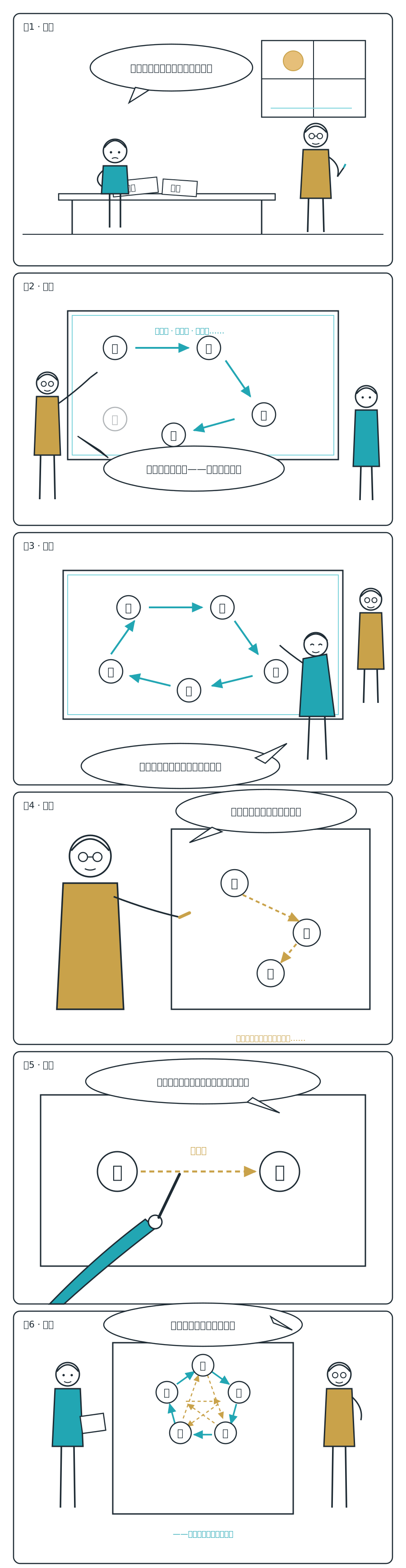
One small thing for today: take a piece of paper, write down something you are working on, draw three circles, and connect them with two lines — one that feeds it, one that holds it back. See which line is missing.
Further reading: Bagua and binary.
Acrosstar offers cultural readings and structured analysis based on Chinese BaZi (Four Pillars), for self-reflection and decision support. It describes tendencies, does not predict events, promises no specific outcome, and is not medical, psychological, legal or financial advice. For major decisions, consult a licensed professional in that field. For adults 18+ only.
Want your own situation drawn as a map?
Start with a free topic check: describe your question and we reply whether it suits a reading and which tier fits.