 AcrosstarBaZi consultations · 1:1
Solar terms: a year is a curve
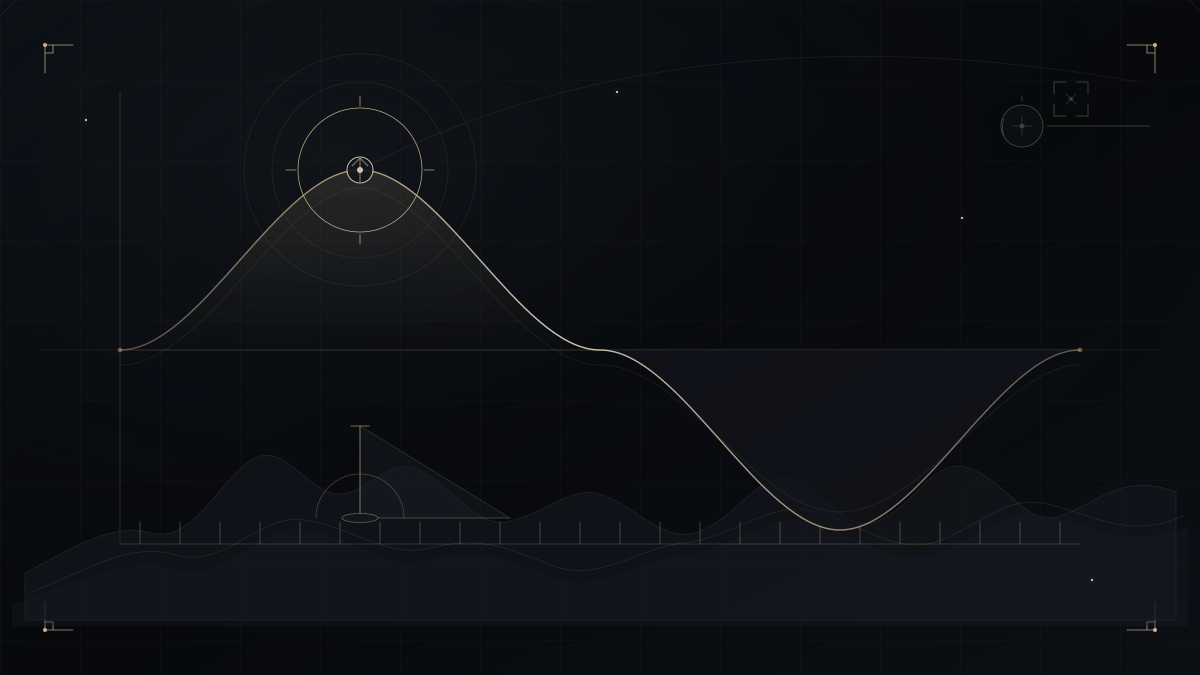
The twenty-four solar terms are usually taught as a list of dates. They are better understood as a curve: the year rises from the winter solstice, peaks in summer, and falls back.
Once you draw the curve, 'good year' and 'bad year' lose meaning. There are ascents, plateaus, descents, and turns. What matters is where on the curve a decision lands.
Geometric day length at 34.62°N (Luoyang) through the year, without refraction, computed from the sun’s longitude; dots are the 24 solar terms of 2026. Longest at the summer solstice, 14.3 h; shortest at the winter solstice, 9.7 h. Rising stretch: xi (growth); falling stretch: xiao (decline).
A launch on the ascent meets an expanding market. The same launch on the descent meets a contracting one and gets called bad luck.
The practical use: place your plans on the curve before you place your hope in them. If the timing is wrong, the plan is not wrong — it is early or late.
A year is a curve. Read the slope, not the date.
References
Acrosstar offers cultural readings and structured analysis based on Chinese BaZi (Four Pillars), for self-reflection and decision support. It describes tendencies, does not predict events, promises no specific outcome, and is not medical, psychological, legal or financial advice. For major decisions, consult a licensed professional in that field. For adults 18+ only.
Want your own situation drawn as a map?
Start with a free topic check: describe your question and we reply whether it suits a reading and which tier fits.